

New Software Oxzep7 Python for Smart Projects
In today’s fast-paced tech ecosystem, every developer looks for tools that offer more functionality with less complexity. Whether you’re working in data science, automation, backend development, or AI experimentation, the demand for powerful yet intuitive Python-based solutions is only growing. Enter the new software Oxzep7 Python—a rising name in the world of modular development environments.
What exactly is it? Why is everyone talking about it? How does it compare to what you’re already using? Buckle up, because this software might just change your workflow.
How New Software Oxzep7 Python Stands Out

One of the first things you’ll notice when exploring new software Oxzep7 Python is that it doesn’t try to reinvent Python. Instead, it enhances what’s already great about it. Think of it as a smart add-on—like giving your favorite toolkit a significant performance boost, without bloating your machine or overcomplicating your syntax.
Here’s a breakdown of what makes this software stand out when compared to traditional Python IDEs and frameworks:
Table: Oxzep7 Python vs Traditional Python Tools
| Feature | Oxzep7 Python | Traditional Python Tools |
| Modular Add-ons | ✅ Built-in, lightweight | ❌ Mostly external packages |
| Real-time Syntax AI Assistance | ✅ Available | ❌ Not native |
| GUI and CLI Compatibility | ✅ Dual support | ✅ Depends on tool |
| Cloud Integration | ✅ Seamless | ❌ Often needs config |
| Auto Dependency Management | ✅ Native | ❌ Manual in most cases |
| Plugin Store | ✅ Curated and secure | ❌ Community-dependent |
| Performance Optimization | ✅ Dynamic memory tuning | ❌ User-dependent |
The table above summarizes what makes Oxzep7 Python a truly standout toolkit. It simplifies what used to take five different tools to achieve and bundles it into one cohesive environment. That’s efficiency redefined.
Why Developers Are Adopting Oxzep7 Python Rapidly
It’s not just hype. From Reddit threads to GitHub repos and closed Slack groups, developers are sharing how Oxzep7 Python saves time while coding, debugging, and even deploying. One of its biggest draws? Speed—and not just in terms of execution.
With built-in optimization algorithms, Oxzep7 Python minimizes memory leaks and maximizes your system’s processing capabilities. It’s not magic—just really smart engineering.
Built-in Features That Reduce Development Fatigue

For anyone who’s spent hours fixing dependency issues or version mismatches, Oxzep7 Python comes as a breath of fresh air. It comes with auto-environment management, dependency predictions, and in-editor AI prompts that understand your code logic—not just syntax.
Some standout features include:
- Instant environment cloning
- Multi-language plugin interface
- Pre-integrated test sandbox
- Real-time Git push/pull with change insights
- Auto-documentation snippets as you code
And yes, it does all that while staying shockingly lightweight.
Use Cases That Go Beyond Just Python Scripting
While it’s clearly powerful for Python coders, the Oxzep7 software isn’t limited to just script-level programming. Numerous use cases are supported by it, such as:
- Building scalable web APIs
- Automating system tasks across multiple servers
- Fast prototyping in machine learning and AI models
- Game logic scripting with visual component support
- DevOps pipelines with multi-environment hooks
Whether you’re a beginner exploring object-oriented Python or a seasoned developer deploying ML models with PyTorch or TensorFlow, Oxzep7 adapts.
What Makes the Oxzep7 Ecosystem Secure
One of the concerns with modern software, especially in the open-source world, is security. Oxzep7 Python addresses this head-on. Each plugin in its ecosystem undergoes digital signature verification and real-time vulnerability scanning.
This means fewer surprises in production and more confidence during deployment. There’s also built-in rollback support, so if a tool or script causes trouble, you can restore your workspace with just one command.
Community and Support: Is It Developer-Friendly?
Despite being new, the Oxzep7 community is buzzing. It’s not just a quiet GitHub page—there are vibrant forums, weekly AMAs with the developers, and even live debugging hangouts. This is a huge win for developers who hate being left in the dark when something breaks.
Plus, Oxzep7 supports:
- Community plugin submissions
- In-tool feedback options
- Crowdsourced script libraries
- Regular software patch cycles
How to Get Started with Oxzep7 Python
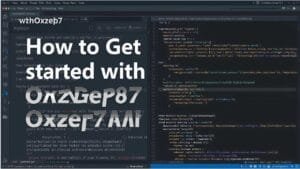
Starting is surprisingly painless. Unlike tools that make you jump through hoops, Oxzep7 offers one-line installation. You can run it via:
Or use their bundled installer for a full suite setup, especially helpful if you’re integrating it with Docker or cloud-based systems.
Once installed, you’re greeted with a modern, minimal UI that doesn’t get in your way. The intuitive layout offers immediate access to your projects, tools, and live logs.
Final Thoughts on New Software Oxzep7 Python
In the world of Python development, where countless tools aim to simplify the process, new software Oxzep7 Python doesn’t just compete—it elevates the game. With a thoughtful combination of speed, simplicity, smart features, and security, it creates a new benchmark for modern Python environments.
Whether you’re debugging a small script, collaborating on a cloud-native project, or building enterprise applications, Oxzep7 Python could quickly become your go-to tool.
Q&A: Frequently Asked Questions
Q1: Is Oxzep7 Python compatible with existing Python libraries?
A: Yes, it fully supports all standard Python libraries, and even improves package compatibility through its auto-resolve feature.
Q2: Can I use Oxzep7 for machine learning projects?
A: Absolutely. It integrates well with ML libraries like TensorFlow, PyTorch, and even lightweight frameworks like Scikit-learn.
Q3: Does the software run on Mac, Windows, and Linux?
A: Yes, it is cross-platform. The same codebase and functionality exist across all three major OS environments.
Q4: Is Oxzep7 Python beginner-friendly?
A: While it’s powerful enough for professionals, it’s built with newcomers in mind. Tutorials and AI-guided prompts help reduce the learning curve.
Q5: Does it require internet access to function?
A: Internet is needed for initial setup and updates, but core functionalities work offline once installed.
Q6: Is it open source or commercial?
A: It’s a hybrid model. The core engine is open-source, but some advanced plugins and enterprise tools are licensed.
Q7: How does Oxzep7 compare to PyCharm or VS Code?
A: Unlike PyCharm, which is IDE-focused, and VS Code, which is general-purpose, Oxzep7 is tightly built around Python and modular tasks—offering a more focused experience.






One Comment