
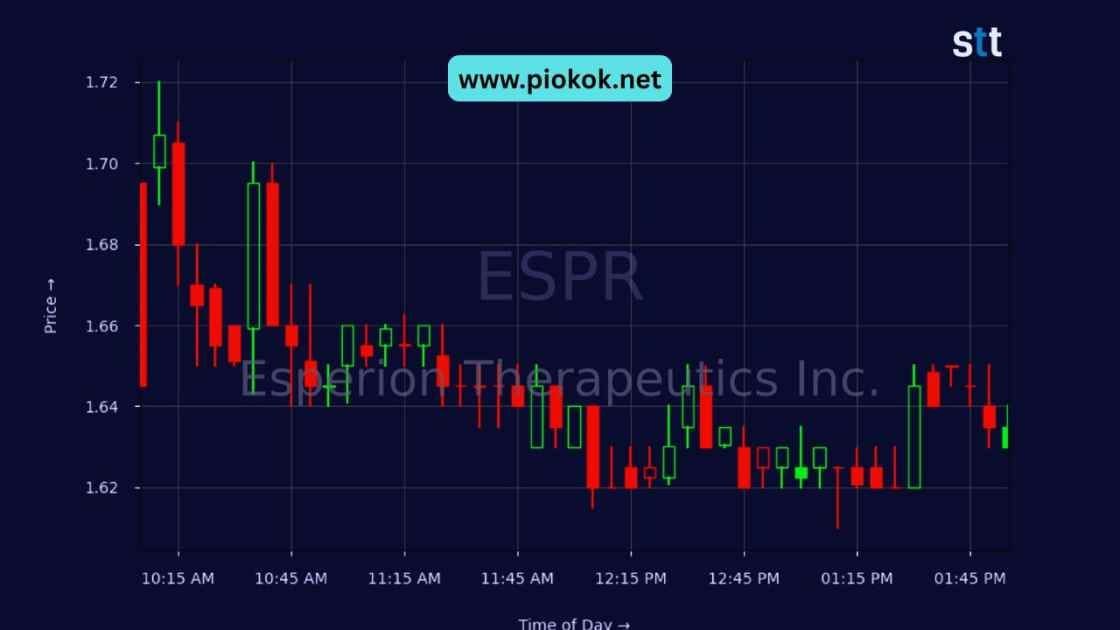
Espr Stocktwits Insights and Community Signals
StockTwits has become one of the fastest places for traders, investors, and market commentators to share real-time reactions to company news, price moves, and rumors. For a microcap or lesser-known ticker like ESPR, the platform can surface early signals, spikes in mentions, repeat messaging, or influential posts that sometimes precede larger market moves. This article, focused on espr stocktwits, explains how to read StockTwits conversations for signal (and noise), how to turn community indicators into practical monitoring rules, and how to protect yourself from false starts and herd traps.
I’ll give you clear, actionable steps, sample filters, a couple of short case-study scenarios, and a reliable FAQ at the end. The aim is not to give trading advice but to provide a social-listening toolkit so you can interpret StockTwits activity for ESPR more confidently.
What StockTwits is and why it matters for ESPR

StockTwits is a social network built for market conversation. Users post short messages (like tweets) about tickers and financial instruments; posts can be labeled bullish or bearish, can receive replies and likes, and can tag multiple tickers. For tickers that have lower daily volume or fewer institutional followers, social platforms often amplify small pieces of news or opinion into outsized attention. That’s why ESPR Stocktwits is useful: when ESPR appears in trending feeds, or when the number of mentions jumps, that’s often the earliest sign that retail attention is intensifying.
StockTwits’ value is not in replacing fundamental research or technical analysis, but in supplementing them. It helps you detect sentiment swings, crowd-driven momentum, and the rise of particular narratives (e.g., “breakthrough sales,” “insider buying,” “short squeeze chatter”). The challenge is separating high-signal contributions (credible users, corroborated news) from low-signal repetition (bots, pump messages, or rumor mills). Below is a short practical primer to help you do that.
Key community signals to watch for (quick reference)
Below is a compact table you can use as a quick, at-a-glance guide. This table appears early so you can refer to it while reading the deeper explanations that follow.
| Signal | What it looks like on StockTwits | Why it matters for ESPR | Immediate action |
| Mention spike | Sudden jump in posts referencing $ESPR (mentions/minute) | Could indicate a news release, rumor, or viral post | Check news sources and filings; watch volume |
| High-engagement post | One post with many likes/reposts and replies | An influencer may be pushing an idea that others will follow | Verify the claim; monitor price/volume reaction |
| Repeated messaging | Multiple accounts sharing the same text or link | Possible coordinated activity or press release spread | Check for origin; use author credibility score |
| Bull/Bear label shift | Quick rise in bullish or bearish tag counts | Sentiment momentum direction | Combine with volume to gauge conviction |
| New co-mentions | $ESPR begins appearing with other tickers | Could reveal narrative (e.g., industry catalyst) | Investigate co-ticker news and relationships |
How to measure real-time sentiment for ESPR

Reading sentiment on StockTwits is partly art and partly a simple measurement. Here are practical metrics to track and how to interpret them when you see activity around ESPR StockTwits.
Mention Volume (Velocity)
Count mentions per minute/hour. A normal baseline for ESPR (whatever you determine by watching for several days) may be low; when you mention velocity spikes 3–5x above baseline, that’s your signal threshold. Rapid velocity with matching trading volume on exchanges is stronger than velocity alone.
Engagement per Post
A single post that gets many likes or replies can carry outsized influence. Engagement-per-post scaled by author credibility gives you a measure of “social reach.” If a high-credibility author posts about ESPR and engagement spikes, treat that differently from many low-engagement posts.
Bull/Bear Label Ratio
StockTwits users can tag posts as bullish or bearish. A sudden move in the bull/bear ratio can show shifting sentiment, but be careful — users sometimes mass-tag messages to create a narrative.
Author Credibility
Not all users are equal. Create a simple scorecard — verified accounts, users with a track record of accurate calls, and accounts with long tenure should be weighted higher. If a cluster of low-credibility accounts repeats a message, discount the signal.
Content Patterns (Text Analysis)
Watch for repeated phrases, identical links, or coordinated language. That’s often a red flag for coordinated amplification. Natural, diverse language signals organic conversation.
Filtering noise: practical filters and tools
If you’re following espr stocktwits regularly, you need filters. Here’s a compact set of rules you can implement manually or program into a monitoring tool:
- Baseline normalization: keep a rolling 24–72 hour average of mentions and flag 3x+ spikes.
- Engagement weighting: only elevate alerts when engagement per post exceeds a minimum (e.g., >20 likes or >10 replies for microcap chatter).
- Author whitelist/blacklist: maintain a list of trusted posters and known spammers/bots.
- Duplicate-text detection: auto-flag identical posts spread across accounts — investigate origin.
- Cross-source validation: only escalates when at least one external source (newswire, SEC filing, credible press) corroborates.
These rules will reduce false positives and let you focus on signals that matter.
Spotting trending posts and determining credibility
A trending post is not automatically a trading signal. Treat it as a lead to investigate. Here’s a step-by-step playbook for assessing a trending ESPR post:
- Identify the trigger — Is the post sharing a link, a screenshot, or a claim? Does it cite an external source (article, SEC filing)?
- Check the author — Are they known? How many followers? Are past posts accurate? Quick checks save time.
- Measure engagement velocity — How fast is the post accumulating likes, reposts, and replies? Slow burn is different from instant explosion.
- Corroborate externally — Search newswires, press releases, company website, or official social channels. If there is no corroboration, treat it as a rumor.
- Observe price/volume — If the post coincides with a real move on the exchange, that suggests market participants are acting on the message.
- Decide on action — Watch-only, open a small exploratory position, or ignore. Risk-manage aggressively if you trade on social signals.
Example table: quick credibility checklist (placed for clarity here)
| Check | Pass / Fail | Implication |
| External source present | Pass = verified, Fail = unverified | Verified increases probability of real news |
| Known author | Pass = trusted, Fail = unknown | Trusted authors carry more weight |
| Engagement rate | Pass = high, Fail = low | High engagement suggests wider reach |
| Duplicate messaging | Pass = unique, Fail = duplicated | Duplicate suggests possible coordination |
| Price/volume reaction | Pass = present, Fail = absent | Market reaction confirms impact |
(Use this checklist as a fast triage before acting on any social-driven idea about espr stocktwits.)
Case studies — short hypothetical scenarios
Below, I’ll show two short hypothetical examples to help you see how to apply the rules above in real time. These are illustrative; names and details are fictional.
Case A: The Verified Breakout Claim
- 10:04 AM: A verified analyst posts that ESPR secured a major distribution deal; the post links to a press release on a regional business journal.
- 10:06 AM: Volume of posts mentioning $ESPR jumps 6x. Price gaps +12% on high volume.
- Action pathway: Confirm the press release on the company site or PR wire. If confirmed, the social signal is high-quality; consider watching for follow-through or wait for technical retrace for entry. If you trade, size small relative to risk and set a stop.
Case B: The Coordinated Pump
- 2:12 PM: Within ten minutes, 20 accounts post identical messages promoting “insider scoop” about ESPR; messages include the same link to an obscure blog.
- No credible news sources corroborate. Bull/bear labels show heavy bullish tagging. Price ticks up, but volume is low.
- Action pathway: Treat as likely coordination. Do not trade. If you’re monitoring, add accounts to the blacklist and watch for regulatory or platform removal.
Practical monitoring setup for ESPR on StockTwits
If you want a concrete monitoring setup, here are step-by-step instructions you can use immediately:
- Create an ESPR watchlist on StockTwits and your charting platform.
- Set up mention alerts (if available) for 3x baseline velocity.
- Curate a small author whitelist (3–10 accounts you trust) and set a second-tier alert when they post.
- Automate duplicate-text detection using simple scripts or third-party social-monitoring tools (many allow webhook outputs).
- Cross-check with a news API or your own news filters for corroboration.
- Log all spikes in a simple spreadsheet with columns: timestamp, author, link, engagement, price change, and corroboration status. This will train your intuition over time.
Tools & resources to support social listening
You don’t need expensive software to start; many free or low-cost tools help you monitor espr stocktwits:
- StockTwits native watchlists and alerts — quick setup, platform-integrated.
- Simple webhook services (IFTTT, Make/Make.com, Zapier) — good for forwarding mentions to Slack or email.
- Basic text-duplicate detectors — scripts that compute text similarity to detect identical posts.
- Crowdsourced credibility lists — maintain your own spreadsheet of trusted/blocked accounts.
- Charting platform with social overlay — some charting tools allow adding social-volume overlays to price charts.
Make your stack match your need: if you’re only watching ESPR, a simple watchlist + Zapier alert will do; if you’re tracking dozens of tickers, consider a lightweight programmatic stack.
Risk management and compliance notes
Social-driven trades are high-risk for several reasons: rumors, coordinated pumps, and delayed or incorrect information can create sharp moves and reversals. Keep these guardrails:
- Position sizing: Limit trade size for social-driven ideas (e.g., 0.5–1% of portfolio per speculative idea).
- Use stops: If the price moves rapidly against you, have predefined exit rules.
- Avoid trading on single-source rumors: Verify across at least one credible external source before committing significant capital.
- Document decisions: Keep a log of why you acted; this helps refine your rules.
- Regulatory awareness: Never share or act on non-public insider information. Also, be aware that orchestrating promotion for unregistered securities can be illegal.
Putting it together: a simple decision workflow
- Signal detected (mention spike or influencer post).
- Triaging checks (author credibility, corroboration, engagement velocity).
- Cross-validation (news, filings, company channels).
- Risk assessment (position size, stop placement).
- Action or monitor (enter small, set stop, or ignore and archive).
- Post-event review (log what happened and what you learned).
This workflow turns noisy social data into a repeatable process.
Monitoring thresholds and recommended actions
| Metric | Threshold | Recommended immediate action |
| Mention velocity | ≥ 3× baseline | Triage: quick check for news + author credibility |
| Single post engagement | ≥ 50 likes or ≥ 20 replies | Investigate post origin; high priority if the author is trusted |
| Duplicate posts | >5 identical posts in 10 minutes | Flag as potential coordination; do not trade without corroboration |
| Stronger signal — combine with news for a decision | >5% intraday on low volume | Be cautious — could be pump; wait for confirmation |
| Price moves on low volume | >5% with high volume | Investigate post origin; high priority if the author trusted |
(Keep this table saved with your watchlist — it’s a handy cheat-sheet when the feed gets noisy.)
Common pitfalls when following espr stocktwits
- Overreacting to single posts. A single viral post is not the same as confirmed news.
- Chasing momentum without context. Price moves driven by amplification can reverse quickly.
- Ignoring the author. A trustworthy source changes the equation.
- Relying only on sentiment labels. Bull/bear tags are useful but manipulable.
- Failing to log outcomes. Without a record, you won’t learn.
How to build intuition quickly
Spend a week passively observing. Log spikes; note whether they were accurate or false, whether they produced sustained moves or quick fades, and which authors were reliable. The more patterns you record, the faster you’ll classify future signals correctly.
Practical example — how an alert plays out (minute-by-minute)
- T = 0 minutes: You get an automated alert: mentions for ESPR jump 4× above baseline.
- T = 1–2 minutes: You open StockTwits and see one high-engagement post by a long-term healthcare analyst linking to a regional trade publication.
- T = 3–5 minutes: Price ticks up with volume increase on the exchange. You find the article on the publication and a small press release on the company’s site.
- T = 10 minutes: News outlets pick it up; sentiment labels turn bullish. You choose to watch for a technical setup or wait for a dip-buy opportunity rather than chasing the initial spike.
- Post-event: You log the event and categorize it as “high-quality social signal → verified news” in your notebook.
This stepwise reaction minimizes emotional decisions and focuses on verification and measured responses.
Advanced tip — co-mention network analysis
Sometimes, ESPR will spike on StockTwits because it’s being co-mentioned with other tickers in a specific narrative (e.g., “specialty healthcare consolidations”). Mapping co-mentions over time reveals the narrative clusters and helps you understand whether the interest is industry-driven or ticker-specific.
A small co-mention heatmap (even in a spreadsheet) can identify the top 5 co-mentions and whether they are rising or falling. This is useful for understanding whether social attention is likely to have staying power.
Ethical and platform considerations
Platform rules and community norms matter. StockTwits and other social platforms often remove coordinated, deceptive content. If you identify a coordinated promotion of ESPR that looks unlawful or manipulative, consider reporting it to the platform. Ethical monitoring improves the space for everyone.
Conclusion — turning social noise into usable signals
Monitoring espr stocktwits effectively is less about catching every tweet and more about building a concise, repeatable process: measure baseline activity, set sensible thresholds, triage quickly, corroborate outside StockTwits, and manage risk tightly.
Use simple tables and checklists to keep objectivity during spikes. Over time, disciplined logging and review will make social-driven decisions clearer and less emotional. The social web is a powerful amplifier that treats it as a sensor, not a decision-maker.
Frequently Asked Questions (FAQ)
Q1: What exactly is StockTwits and how is it different from Twitter/X?
A: StockTwits is a social platform focused on finance and market conversation; posts are ticker-centered (e.g., $ESPR), and the community often tags posts bullish or bearish. Unlike general-purpose platforms, StockTwits aggregates market-specific chatter, making it easier to find and track investor sentiment for a specific ticker such as ESPR.
Q2: How do I tell a credible post about ESPR from a rumor?
A: Check the author’s credibility (history, track record), look for external corroboration (press releases, news wires, SEC filings), examine engagement velocity, and watch for duplicate-text patterns. If only low-credibility accounts repeat the claim and no credible source corroborates, treat it as unverified rumor.
Q3: How quickly should I act on a StockTwits signal for ESPR?
A: Act only after triage. Immediate reaction without verification is risky. Use StockTwits to flag a lead, then corroborate through news and market data before trading. If you do act quickly, reduce position size and set clear stops.
Q4: Are there tools that automatically detect coordinated posts about ESPR?
A: Yes — some social-monitoring tools and custom scripts can detect duplicate messages, rapid reposting, or similar text across accounts. You can also use simple webhook automations to collect posts and run similarity checks in a spreadsheet or script.
Q5: Does a spike in StockTwits mentions always cause price movement for ESPR?
A: No. Spikes sometimes precede price moves, but not always. A spike without matching trading volume is less likely to produce sustained price movement. Always compare mention velocity with on-exchange volume.
Q6: How should I size trades that originate from social signals?
A: Use conservative position sizing, typically much smaller than your regular allocations for well-researched investments. A common rule for speculative social-driven trades is to keep exposure to a small fraction (for example, 0.5–1% of total portfolio) and use strict stop-loss rules.
Q7: Can following StockTwits lead to false confidence or bias?
A: Yes. Social platforms can create false consensus through repetition and amplification. Maintain skepticism, verify facts, and use structured logging to avoid confirmation bias.
Q8: How often should I update my author whitelist/blacklist on StockTwits?
A: Review it at least monthly, more often if you actively trade. Add newly reliable contributors and remove those who repeatedly share false or manipulative content.
Q9: Is it legal to promote a stock on StockTwits? What’s the line between promotion and manipulation?
A: Promoting your opinion is legal; coordinating to manipulate a stock’s price or share false insider information is illegal. Avoid participating in coordinated campaigns to pump a ticker; such activities can draw regulatory scrutiny.