
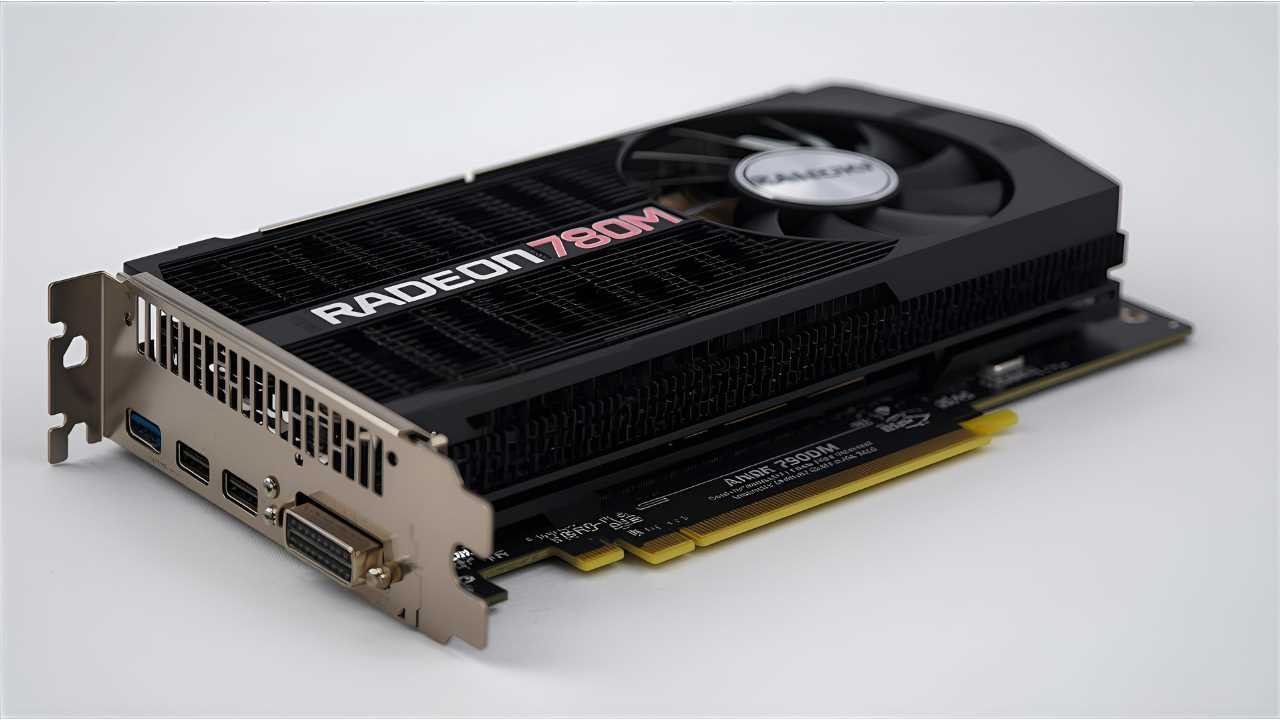
AMD Radeon 780M Performance, Features, and Specs
When it comes to integrated graphics power, AMD Radeon 780M has turned quite a few heads in the gaming and tech community. Found in AMD’s latest Ryzen 7000 series mobile processors, this integrated GPU proves that onboard graphics can now rival entry-level dedicated GPUs. The AMD Radeon 780M graphics solution delivers surprising performance in modern games, productivity tasks, and even light content creation.
Let’s take a deeper look into what makes this GPU such an impressive piece of hardware, from its performanceand benchmarks to its drivers, features, and equivalent comparisons.
AMD Radeon 780M Overview and Specifications
The AMD Radeon 780M is part of the RDNA 3 architecture and comes integrated with select Ryzen 7040-series processors, specifically those based on the “Phoenix” chip. It combines power efficiency, strong compute capabilities, and next-gen graphical fidelity — making it a perfect fit for thin-and-light laptops as well as high-end ultrabooks.
Here’s a quick breakdown of its main specifications compared to similar GPUs:
| Specification | AMD Radeon 780M | Radeon 680M | Intel Iris Xe (96 EU) |
| Architecture | RDNA 3 | RDNA 2 | Xe-LP |
| Compute Units (CUs) | 12 | 12 | 96 EUs |
| Base Clock | ~2700 MHz | ~2400 MHz | ~1450 MHz |
| VRAM (Shared) | Up to 8GB LPDDR5/DDR5 | Up to 8GB | Up to 8GB |
| DirectX Support | 12 Ultimate | 12 Ultimate | 12 |
| Process Node | 4nm (TSMC) | 6nm | 10nm SuperFin |
| Ray Tracing | Supported | Supported | Limited |
This table highlights why AMD Radeon 780M graphics has become such a buzzword among enthusiasts — it brings desktop-grade performance to the integrated GPU segment.
Design and Architecture
AMD built the Radeon 780M on its latest RDNA 3 architecture, the same foundation behind its powerful discrete GPUs like the RX 7900 series. This architecture enhances per-watt efficiency and allows higher frequencies without excessive power draw.
The GPU’s 12 compute units translate to 768 stream processors, giving it impressive throughput for both graphical rendering and GPGPU tasks. Combined with faster LPDDR5 or DDR5 memory bandwidth, this GPU can handle demanding visuals at 1080p and even push playable frames at 1440p for select titles.
AMD Radeon 780M Performance in Real-World Use
When it comes to AMD Radeon 780M performance, the results are nothing short of impressive for an integrated GPU. It’s designed to take advantage of high-speed system memory, efficient drivers, and AI-enhanced rendering technologies.
Gaming at 1080p low-to-medium settings is now possible in titles like Fortnite, Apex Legends, Valorant, GTA V, and Cyberpunk 2077. Even more demanding games like Hogwarts Legacyor Forza Horizon 5are playable with a few tweaks.
Many benchmark results show that the AMD Radeon 780M benchmark scores comfortably above Intel’s Iris Xe and is comparable to some entry-level dedicated GPUs like the GTX 1650 Max-Q.
Gaming Benchmarks and Comparisons
In synthetic and real-world gaming benchmarks, the AMD Radeon 780M graphics chip often surprises users. Below are average frames per second (FPS) results under 1080p settings from multiple benchmark tests:
| Game Title (1080p, Medium Settings) | Average FPS |
| Fortnite | 75 FPS |
| Valorant | 120 FPS |
| GTA V | 82 FPS |
| Apex Legends | 70 FPS |
| Cyberpunk 2077 | 42 FPS |
| Forza Horizon 5 | 55 FPS |
| Hogwarts Legacy | 38 FPS |
These numbers show why AMD Radeon 780M performance has been widely praised — it’s the first time a laptop without a dedicated GPU can truly deliver playable frame rates across AAA and eSports titles alike.
AMD Radeon 780M Equivalent GPUs
In terms of raw graphical power, the AMD Radeon 780M equivalent sits somewhere between the NVIDIA GTX 1050 and GTX 1650 Max-Q. That’s quite an achievement for an integrated GPU.
This means for users who want solid gaming or graphical performance without a discrete GPU, the AMD Radeon 780M is a cost-effective and power-efficient alternative. It’s especially suitable for students, content creators, or professionals who rely on graphical acceleration for video editing or 3D visualization.
Driver Support and Software Optimization
The AMD Radeon 780M drivers play a crucial role in maximizing performance. AMD’s Adrenalin Edition software allows for fine-tuning, game optimization, and recording gameplay without sacrificing FPS.
Regular driver updates ensure compatibility with new games and provide bug fixes, while features like Radeon Super Resolution (RSR) and FSR (FidelityFX Super Resolution) make it possible to upscale visuals with minimal performance loss — giving you more frames without compromising visual quality.
Efficiency and Thermal Management
Another strong point of the AMD Radeon 780M graphics is its power efficiency. Thanks to the 4nm process node, AMD has managed to deliver higher performance with lower thermal output. This efficiency makes it perfect for ultrabooks and portable gaming laptops that can’t afford heavy cooling systems.
Despite the high boost clocks, most systems with this GPU maintain temperatures below 80°C during sustained gaming sessions — proving the chip’s excellent thermal balance.
AMD Radeon 780M in Content Creation
Beyond gaming, AMD Radeon 780M performance extends to creative workloads. Whether it’s video editing in DaVinci Resolve, rendering models in Blender, or handling GPU-accelerated tasks in Photoshop, this GPU delivers.
The RDNA 3 architecture improves compute task handling, meaning creators get smoother timelines, faster previews, and efficient rendering times — all without a dedicated graphics card.
Who Should Consider the AMD Radeon 780M?
If you’re looking for a laptop that balances performance, efficiency, and price, any device with AMD Radeon 780M graphics deserves your attention. It’s ideal for:
- Students who want light gaming between classes.
- Professionals need powerful integrated graphics for work and play.
- Travelers seeking performance without bulky hardware.
Essentially, it bridges the gap between high-end integrated solutions and entry-level discrete GPUs.
AMD Radeon 780M Benchmark Summary
Multiple benchmark databases highlight just how strong this GPU performs. Here’s a summary of the AMD Radeon 780M benchmark results compared to previous generations:
| Benchmark Test | Radeon 780M | Radeon 680M | Iris Xe 96 EU |
| 3DMark Time Spy | 3500 | 2850 | 2400 |
| Geekbench 6 GPU Score | 45,000 | 36,000 | 31,000 |
| GFXBench Aztec High | 93 FPS | 78 FPS | 67 FPS |
These numbers show how far AMD has come in integrated GPU development — solid proof that AMD Radeon 780M performance delivers value far beyond its size.
Final Thoughts
The AMD Radeon 780M is a major leap forward in integrated GPU technology. It combines the power of RDNA 3 architecture with next-gen efficiency, making it capable of delivering a truly balanced experience across gaming, content creation, and everyday tasks.
From its strong benchmark results to its smooth performance and consistent driver support, it proves that integrated graphics no longer have to mean compromise. Whether you’re a gamer, creator, or power user, the AMD Radeon 780M graphics chip redefines what’s possible in portable computing.
FAQs
Q: What is the AMD Radeon 780M?
A: The AMD Radeon 780M is an integrated GPU based on AMD’s RDNA 3 architecture, found in select Ryzen 7040-series processors.
Q: How good is AMD Radeon 780M performance for gaming?
A: It can handle modern games at 1080p with medium settings, offering smooth frame rates in most eSports titles and even some AAA games.
Q: What is the AMD Radeon 780M equivalent to?
A: The AMD Radeon 780M equivalent in performance terms is close to the NVIDIA GTX 1050 or GTX 1650 Max-Q.
Q: Does AMD Radeon 780M support ray tracing?
A: Yes, it does support hardware-accelerated ray tracing, though performance varies depending on the game.
Q: Are AMD Radeon 780M drivers updated regularly?
A: Yes, AMD frequently updates its Radeon 780M drivers through Adrenalin Edition to improve performance and compatibility.
Q: How does the Radeon 780M compare to Intel Iris Xe?
A: The AMD Radeon 780M graphics outperforms the Iris Xe 96 EU in most gaming and benchmark tests, especially in raw 3D rendering.
Q: Can the Radeon 780M handle video editing and 3D work?
A: Absolutely. Its RDNA 3 architecture provides strong GPU acceleration for video editing, rendering, and other creative tasks.
Q: Is the AMD Radeon 780M worth it?
A: Yes. For laptops without dedicated GPUs, it’s one of the most capable integrated solutions available today.